
Chickasaw County Release Basics
Chickasaw County release records come from more than one custodian. The Chickasaw County Regional Correctional Facility is run by the Sheriff’s Department through a regional arrangement with the Mississippi Department of Corrections. It can hold local detainees and MDOC prisoners at the same address. A local booking number and court case point toward the facility and court. An MDOC ID and state sentence point toward the statewide corrections system. That first split controls where a reliable release record will be found.
A county detainee may leave after bond, a court order, dismissal, time served, a completed local sentence, or a transfer. An MDOC prisoner may leave an institution for parole, earned-release supervision, maximum discharge, another state unit, or another authority. Transfer is not freedom. Nor does a probation order always follow a prison stay. Chickasaw County released inmates can remain under supervision even though they are outside a jail or prison.
Chickasaw County Release Types
The release label must be read with the issuing agency and case. Bond or recognizance permits a person to remain outside custody while the case proceeds. It does not erase the charge. Time served reflects custody credit or sentence completion. A dismissal is a court outcome, though the physical jail exit may have happened earlier. Parole and earned-release supervision place an MDOC prisoner in the community under terms. A detainer can send the person straight to another authority.
| Release type | What it means | Best next record |
|---|---|---|
| Bond or recognizance | Pretrial release while the case remains open | County release entry and bond order |
| Time served or local completion | Credit or sentence completion supports the exit | Release timestamp and sentencing order |
| Dismissal | The court ended the charge or case | Final disposition plus jail exit entry |
| Parole or ERS | Conditional community placement under state authority | MDOC record, Board action, and supervision status |
| Maximum discharge | The state sentence reaches its final endpoint | MDOC discharge certificate |
| Transfer or detainer | Another agency takes custody | Receiving-agency record |
What does “released” prove? It proves only that custody ended in the named system at that event. It does not establish the result of every charge or show that no other agency holds the person.
Chickasaw County Release Fields
A release record is not a single standard form. Chickasaw County may hold a jail-management entry, release sheet, bond paper, transport log, or booking record with release fields. MDOC may hold a status update, time computation, discharge certificate, parole action, or community-supervision entry. Request the existing record by name, date range, booking or MDOC number, and case number. Do not ask an office to create a new report or decide whether someone is “free.”
| Field | What it shows |
|---|---|
| Name and identifiers | The person tied to the event, checked with DOB and record numbers |
| Booking number and time | The specific Chickasaw County custody episode |
| Charge and case number | The court file that explains the legal outcome |
| Release date and time | When the facility executed the event |
| Release type or authority | Bond, court order, time served, discharge, or another basis |
| Receiving agency | Whether the exit was actually a transfer |
| Supervision status | Whether parole, ERS, or probation follows custody |
| Booking photograph | An arrest-stage image requested separately when public |
No official Chickasaw County retention period for an online former-detainee display was found. Court records can outlast a short roster display, while a sealed or expunged record may lawfully become less visible. Expungement is a court process that can remove a qualifying offense from an official system. It does not prove that the event never occurred, and it must not be bypassed.
Note: Match records by booking number, MDOC ID, DOB, case number, and dates rather than by a name or photograph alone.
Request Chickasaw County Release Records
The Mississippi Public Records Act supplies the county request path. Call first because no dedicated Chickasaw County records form, records hours, or local fee schedule was verified. The Sheriff’s Department and correctional facility have neighboring addresses, but the database custodian should be confirmed before sending a request. Ask for a narrow period and named existing fields. Electronic copies and a cost estimate can keep the request focused.
- Identify the custody episode with full name, DOB, booking number if known, and an approximate booking or release range.
- Call the facility or Sheriff’s Department to confirm which office keeps the booking and release data and how it accepts written requests.
- Request booking time, release time, release type or authority, charge, case number, and any public receiving-agency field. Ask for the booking photograph separately.
- State a cost ceiling and request an itemized estimate before work exceeds it. No county fee amount should be assumed.
- If part is withheld, ask for the legal basis and a redacted or segregable copy of any nonexempt portion.
Chickasaw County Sheriff’s Department
130 Lancaster Circle
Houston, MS 38851
662-456-2339
Chickasaw County Regional Correctional Facility
120 Lancaster Circle
Houston, MS 38851
662-456-3319
The Act allows actual-cost fees, and exemptions can protect juvenile, medical, victim, security-sensitive, investigative, sealed, or expunged material. If the person was in state custody, use the MDOC public-records portal. MDOC requires writing, publishes a base copy charge of $0.15 per page, and may add permitted search, review, redaction, technology, or mailing costs. Its policy calls for a written response within seven working days and production generally within 14 working days after payment unless more time is explained.
Chickasaw County Release Law
Mississippi Code Title 25, Chapter 61 governs access to public records. Section 25-61-3 defines public records, section 25-61-5 addresses access and response, and section 25-61-7 permits fees based on actual cost. Other privileges and exemptions remain in force. A request should therefore seek the release entry and allow lawful redaction instead of claiming that every field must be open.
State sentence rules are separate. Section 47-5-138 concerns earned time and earned-release supervision, while section 47-7-3 concerns parole eligibility. Crime date, sentence, offense, credits, exclusions, and later orders can change the result. A broad percentage rule cannot replace the person’s MDOC time sheet and current law. Court orders, MDOC computations, and the executed release document answer different parts of the same question.
Chickasaw MDOC Release Transport
Travel planning differs by custody type. The MDOC Family and Friends FAQ says a case manager verifies a state prisoner’s release travel plan. When bus travel is requested, MDOC buys a ticket to the destination or nearest city, but not for out-of-state travel. That policy belongs to an MDOC release. It should not be promised to someone bonding out of the Chickasaw County Regional Correctional Facility on a county case.
For a person housed locally under MDOC authority, ask the case manager what destination has been approved and whether the event is a community release. A bus plan supports an expected discharge, but it does not replace the final release record. County detainees and their families should ask the regional facility about the actual exit process because no sourced local transport policy was found.
Chickasaw MDOC Release Documents
MDOC requires a discharge certificate before a state-prison release. Its FAQ also says inmate funds are given just after release. When the person moves to another facility, those funds follow the person instead of being treated as money paid on community release. The difference helps separate a true MDOC discharge from an institutional transfer.
A county booking-release entry remains the better proof for a local detainee. MDOC’s certificate applies to the state sentence and does not replace Chickasaw County bond papers, a court’s time-served order, or the local facility timestamp. Where both county and MDOC records exist, compare IDs, authority, and time. Similar locations do not make the documents interchangeable.
Note: A location change and a transfer of funds can show movement within custody, not release into the community.
Proving MDOC Release in Chickasaw
A tentative date is a forecast. The discharge certificate is evidence that MDOC’s release process was carried out. MDOC states that release processing can take 30 to 45 days, and parole or ERS dates are not guaranteed. An approved address, sentence computation, detainer check, and other prerelease work may still affect whether the person leaves on the date visible in a public result.
The best proof combines an updated MDOC record with the certificate or community-supervision entry. If parole applies, add the State Parole Board action. If the state releases a person to another authority, check that receiving system too. For a Chickasaw County detainee who never entered MDOC jurisdiction, seek the county release record instead. The state certificate does not document an earlier county bond-out.
The matched MDOC release FAQ shows the official state guidance used to distinguish a projected date from an executed discharge.
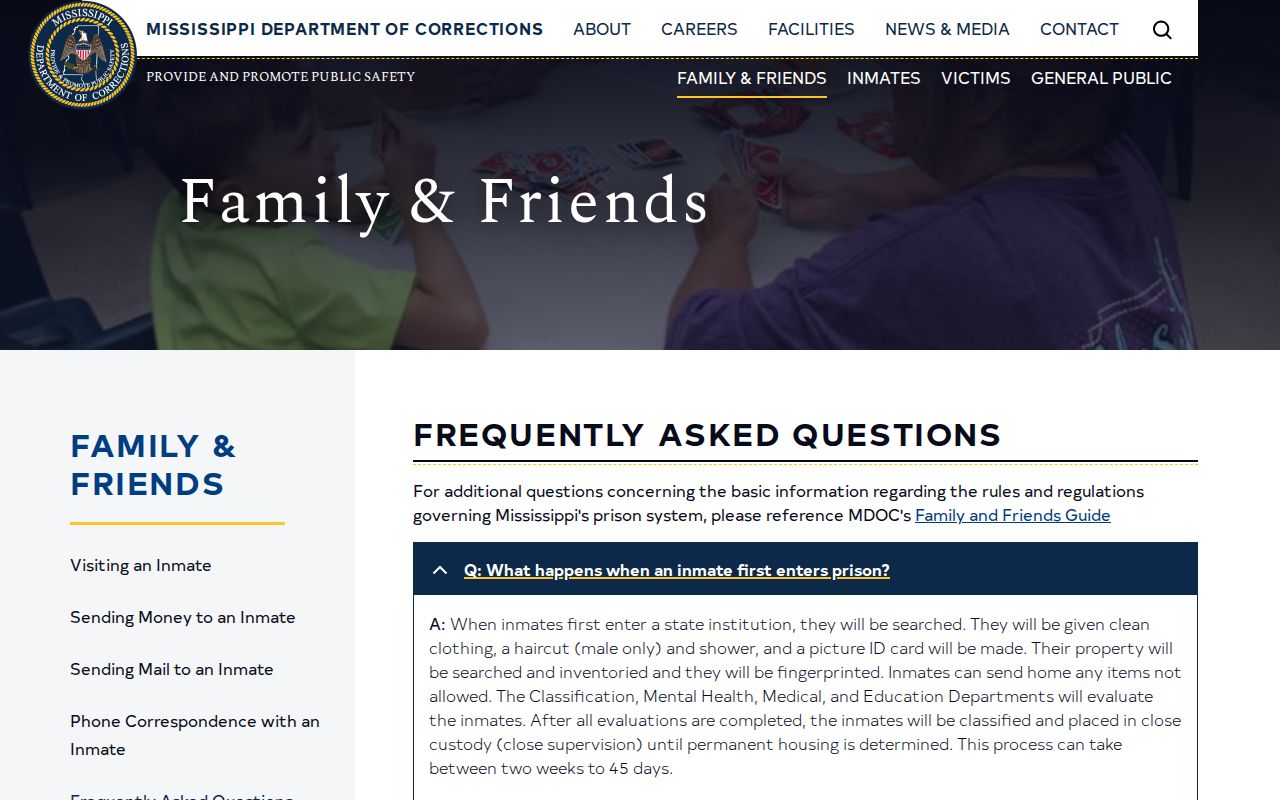
The state process shown here belongs to MDOC prisoners, including some housed at Chickasaw’s regional facility, rather than all county detainees.
Chickasaw Release Reentry Documents
MDOC reentry documentation describes prerelease help with identification papers and some public-program documents. That support can explain why a person completing a state sentence has paperwork prepared before leaving custody. It is not a Chickasaw County jail service, and it should not be assumed after a short county stay.
Records and reentry papers serve different purposes. A discharge certificate proves MDOC carried out the state release. Identification papers help the person resume day-to-day tasks. A county release sheet shows the facility event. Keeping those roles distinct prevents a reentry referral from being mistaken for legal proof of release.
Find Chickasaw County Released Inmates
Start with jurisdiction, not a broad name search. The regional facility’s mixed role makes that step vital. A local court case and booking number lead to county records. An MDOC ID leads to state offender and supervision records. A federal register number leads to BOP. An A-number and country of birth lead to ICE. Then seek a positive, dated event rather than treating a missing current-custody name as proof.
- Identify whether the person was a county detainee, MDOC prisoner, federal prisoner, or subject to an immigration transfer.
- Check the matching present-state source and confirm identity through several fields.
- Obtain the positive release event: county timestamp, MDOC discharge or supervision record, BOP release line, or ICE confirmation.
- Read the court docket for bond, dismissal, sentence, credit, revocation, or an amended order.
- Check parole, ERS, probation, or other supervision if the person is outside an institution.
- Resolve conflicts by date and custodian. A transfer event must be followed to the receiving agency.
Why did the name leave the roster? A current roster answers who is held now. A released person usually drops off, but so can someone transferred or temporarily moved. The executed release or transfer record resolves the gap.
Chickasaw County Offender Search
The MDOC inmate search is the primary online source for a state-sentenced person, even when that person was housed at Chickasaw County Regional Correctional Facility. It is not a complete list of people briefly held on local charges. Search by MDOC ID when possible. With a name search, compare DOB, physical details, photo, sentence facts, and county of conviction before relying on the result.
| Search or result field | Use and limit |
|---|---|
| First and last name | Broad input; aliases and common names can cause missed or false matches |
| MDOC ID | Most precise state identifier |
| DOB and descriptors | Help distinguish people but do not stand alone |
| Location and change date | Show placement or movement, not automatic discharge |
| Sentence and offense | Connect the person to state jurisdiction and conviction county |
| Tentative Release | Current projected date, not proof of actual release |
When the date has passed, check whether the record indicates an institution, Community Corrections, parole, ERS, or full discharge. ERS means earned-release supervision, a conditional status under MDOC authority. For parole, the Chickasaw County Parole / Probation resource explains the separate parolee search and local office. A no-hit does not prove that the state sentence never existed or has fully ended.
Chickasaw County Recent Releases
No official Chickasaw County 24-hour or 72-hour released-person feed was verified. The facility profile is a contact page, not a roster or release archive. No official sheriff inmate app, release-photo channel, update cadence, or online retention rule was found. Commercial recent-booking lists must not be relabeled as county release records.
For a time window, request the existing release log or booking-release entries between exact timestamps. Ask for the release time, booking number, authority, case, and any receiving agency. State that transfers should be listed apart from community releases. If the system cannot produce a list, narrow the request to existing entries rather than demanding a new compilation. The Released Last 24 Hours process gives the same-day request path.
The official regional-facility profile is the verified local contact fallback.
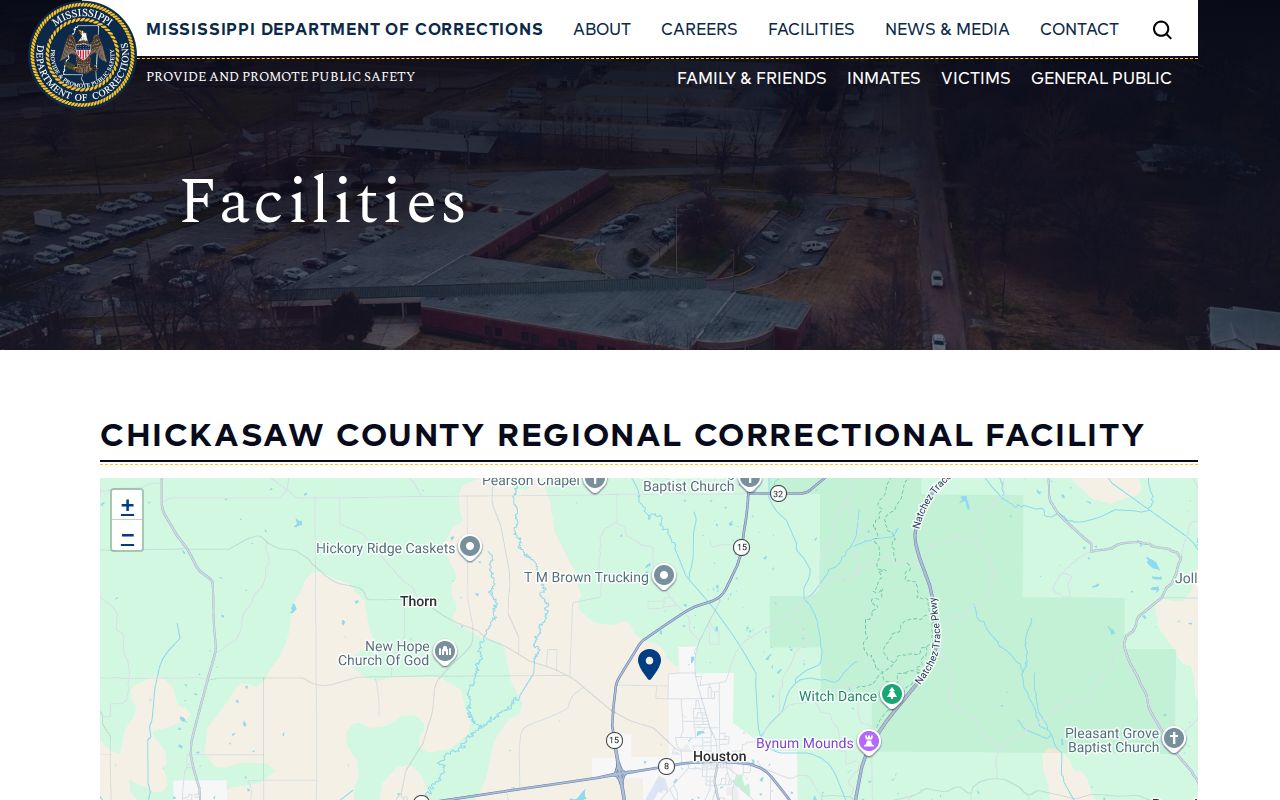
The profile confirms the correct facility, but it does not provide a list of Chickasaw County released inmates.
Note: Use an exact start and end time because no official rolling-window definition has been published for Chickasaw County releases.
Chickasaw Release Court Routing
Chickasaw County has Houston and Okolona court and government contexts. The correct clerk depends on the case and judicial district. Use the court name, case number, and district shown on a booking entry or order. Do not assume every record is in Houston because the regional correctional facility is there. Circuit Court commonly holds felony disposition records, while Justice or Municipal Court may hold other case records. Chancery Court is not the usual criminal-disposition source.
Mississippi Electronic Courts can help where the court and case participate, though registration, fees, or a clerk request may be needed. Ask for the docket, final disposition, sentence, release-related order, and any later public revocation or amendment. A court order explains the legal basis. The jail record supplies the physical exit time.
The official court portal screenshot shows the statewide access route that must be checked against the particular Chickasaw district and case.
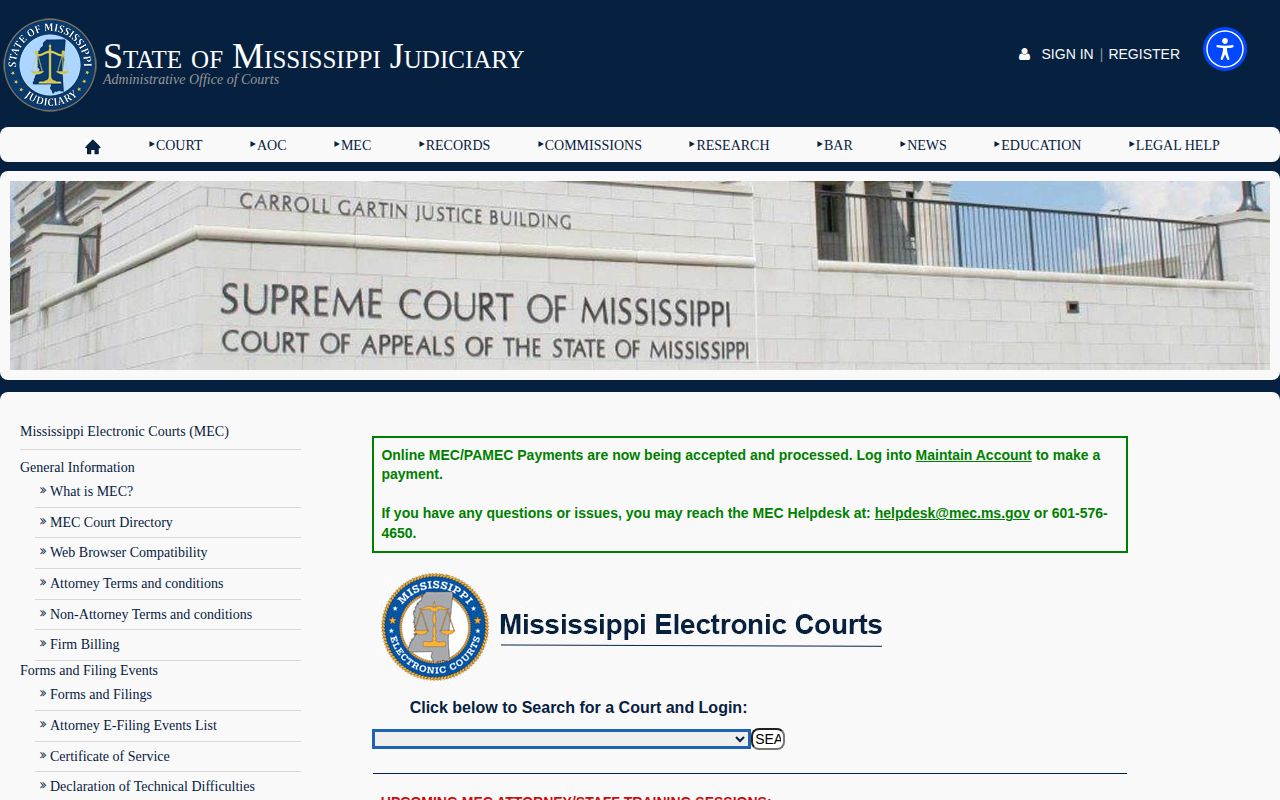
Electronic coverage is only one channel. Older, sealed, or nonparticipating records may require the proper clerk or may not be publicly available.
Chickasaw Release Alerts and Supervision
Mississippi uses MS SAVIN and VINE for agency-fed custody events and notifications. Coverage includes MDOC and participating county jail facilities. Chickasaw County participation was not independently confirmed, so verify coverage with MS SAVIN before relying on an alert. Events can include release, transfer, rehousing, temporary movement, escape or abscond, and return to custody. Read the event label with care.
A person outside prison may be on parole, probation, or ERS. Parole is a conditional release granted by the State Parole Board. Probation is a court-imposed community sentence and may not follow prison. ERS keeps the person under MDOC jurisdiction outside the institution. The separate MDOC parolee search accepts name, MDOC ID, city, and county, including a Chickasaw filter. The local Community Corrections office can verify limited public status when supplied with the right identifier.
The Mississippi Public Sex Offender Registry is a separate conviction-based source for people who must register. It can show a photograph, aliases, residence, conviction facts, and registration details, but it is not a Chickasaw County release list. It does not cover all released people or establish a county jail release date. The registry warns that conclusive identity requires fingerprint comparison.
- Discharge
- The sentence or custody authority reaches its documented endpoint.
- Parole
- Conditional release from prison after a Board grant.
- Probation
- Court-ordered supervision in the community.
- ERS
- Earned-release supervision under continuing MDOC authority.
- Detainer
- A request or hold from another authority that can cause a transfer.
Note: A VINE transfer notice confirms movement between custodians, not release into the Chickasaw County community.
Chickasaw County Federal Release Checks
The BOP Inmate Locator covers federal prisoners and generally retains former-prisoner results from 1982 forward. Search with a register, DCDC, FBI, or INS number when known, or use a name plus age, race, and sex. “Released” or “Not in BOP custody” means BOP custody ended. It does not rule out state, county, ICE, or another form of custody. A future BOP date remains projected.
ICE uses the Online Detainee Locator System. Search with a nine-digit A-number and country of birth, or exact name and country of birth. ICE states that some people released from its custody within the last 60 days may appear. No result is not proof of release. A Chickasaw jail handoff to ICE or the U.S. Marshals is a transfer, so the next agency’s record must be checked.
Chickasaw Released or Still Held
Each source answers a narrow question. A current county list, if supplied by the facility, concerns present local custody. The county release entry documents the local exit. MDOC describes a state sentence and can show an institutional or community status. BOP addresses federal prison custody, while ICE addresses civil immigration detention within its limits. Court records explain the legal order but may not show the moment jail staff executed it.
Still in county custody: confirm with the regional facility and the active court case.
Released from county custody: obtain the dated booking-release entry and match the court order.
Outside an MDOC institution: confirm parole, ERS, or discharge, since each has a different meaning.
Federal or ICE outcome: use the agency locator, then check any receiving authority or supervision record.
Chickasaw County Release Facilities
The regional correctional facility is the central local custodian, while the community work program is an MDOC-related unit reference rather than a separate public walk-in records office. State, federal, and immigration systems cover different forms of custody. Follow the identifier and sentence, not just a Chickasaw location label.
- Chickasaw County Regional Correctional Facility: county detainees use facility and court records; MDOC prisoners use state discharge and supervision records.
- Chickasaw County Community Work Program: verify assignments and changes through MDOC and the case manager.
- Mississippi Department of Corrections Statewide System: use MDOC ID, offender details, and discharge or Community Corrections records.
- Federal Bureau of Prisons System: use the federal locator and court or supervision record.
- Immigration and Customs Enforcement System: use ODLS and ICE confirmation within the system’s stated scope.
Houston and Okolona agencies may make arrests, yet no separate long-term municipal detention facility or historical release portal was verified. Ask where the person was booked and which court issued the disposition. Then follow that record to the actual custodian.