
Mississippi Corrections Release Scope
The Mississippi Department of Corrections is a statewide correctional system, not a Chickasaw County jail. It holds and supervises people sentenced to MDOC. A person convicted in Chickasaw County may be housed anywhere in the state network. Likewise, an MDOC prisoner housed at Chickasaw County Regional Correctional Facility may have been convicted elsewhere. The public record’s county of conviction, current location, and unit fields describe different facts.
That distinction matters at release. MDOC governs the sentence, time computation, institutional move, parole or earned-release supervision status, and maximum discharge for its prisoners. Chickasaw County governs a county detainee’s booking-release entry. A person who moves from the regional facility to another state unit has changed locations, not left custody. A state prisoner who moves to Community Corrections is outside an institution but remains under terms.
Where MDOC Releases Go
An MDOC prisoner may leave an institution for parole, earned-release supervision, maximum discharge, conditional medical release, or another authority. Parole is a conditional release authorized by the Mississippi State Parole Board. ERS, or earned-release supervision, places an eligible person in the community while MDOC jurisdiction continues. Maximum discharge is the expected sentence endpoint without early-release allowances. A surrender on a detainer sends the person to another custodian.
Each route creates different proof. Parole needs the Board action, MDOC execution, and Community Corrections status. ERS needs the computed date, approved placement, and state supervision record. Full discharge is best shown by the discharge certificate. A transfer requires the receiving agency’s record. The Chickasaw County released-inmate search covers the separate county booking-release and court route when no MDOC sentence applies.
- Tentative release
- MDOC’s current anticipated release date after applicable adjustments.
- ERS
- Conditional release under continuing MDOC jurisdiction.
- Parole
- Conditional release after a State Parole Board grant.
- Maximum discharge
- The projected sentence endpoint without early-release allowances.
- Detainer
- A hold or request that can transfer custody to another authority.
Search MDOC Release Records
The MDOC inmate search is the first statewide lookup for a sentenced prisoner. Use the MDOC ID for the most exact match. A name search requires comparison of date of birth, physical descriptors, photo, sentence data, and county of conviction. The result can show entry date, location, unit, location-change date, offense, sentence length, sentence date, and a field labeled “Tentative Release” or “Tentative Release Date.”
- Search by MDOC ID when known, or enter the exact first and last name.
- Match more than one identity field. A name or state corrections photograph alone is not enough.
- Read the location, unit, sentence, conviction county, and tentative release field as separate facts.
- Check whether the person remains in an institution, moved to Community Corrections, or appears fully discharged.
- Confirm an actual release with the certificate, supervision record, or receiving authority rather than the projected date alone.
The MDOC identification image is not necessarily the original Chickasaw County booking photograph. It can help resolve identity, yet it does not prove a case outcome. A current institution listing indicates custody. A community status can indicate parole or ERS. Neither a future date nor a unit change should be captioned as an executed release.
MDOC Release Date Calculations
Tentative release is a forecast, not an appointment. MDOC may consider sentence start and length, concurrent or consecutive terms, pretrial jail credit, prior convictions, habitual status, earned credits, judicial conditions, offense classification, conduct, and the law tied to the crime date. Earned time can be lost. An ERS address must be proposed and approved. A detainer, later sentence, revocation, recalculation, or correction can move the practical date.
Mississippi Code section 47-5-138 supplies the earned-time and ERS framework, with exclusions and limits. Section 47-7-3 separately governs parole eligibility. A repeated “85%” statement is not a safe case calculator because the governing law, offense, sentence, and crime date can change the result. Some offenses require day-for-day service or exclude parole or ERS.
The MDOC supervision guidance distinguishes calculated dates and conditional release types.
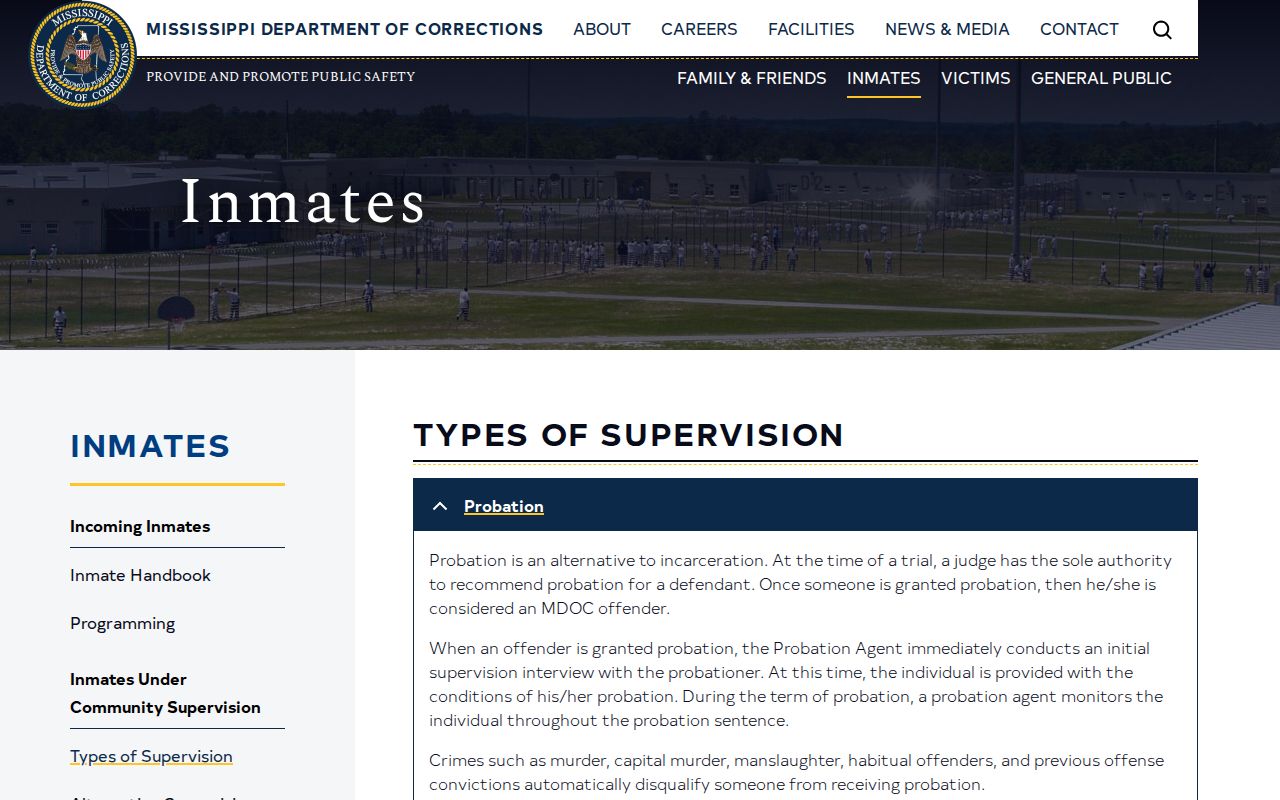
The official guidance shown here helps separate an eligibility date from actual release and full sentence discharge.
MDOC Discharge Certificate Proof
MDOC’s FAQ says release processing can take 30 to 45 days and that a prisoner must receive a discharge certificate before release. The certificate is therefore a stronger marker of an executed state release than the public tentative date. The case manager can confirm the verified date and travel plan. If a person enters parole or ERS, the related supervision record explains why the person remains under state authority after leaving an institution.
This proof rule is state-specific. It does not replace a Chickasaw County booking-release entry for a detainee who bonded out or completed a local sentence before MDOC commitment. A county order and state certificate can also refer to different stages of one case. Compare the MDOC ID, booking number, case number, issuing authority, and dates before treating them as one event.
The MDOC Family and Friends FAQ provides the discharge-certificate and release-process details.
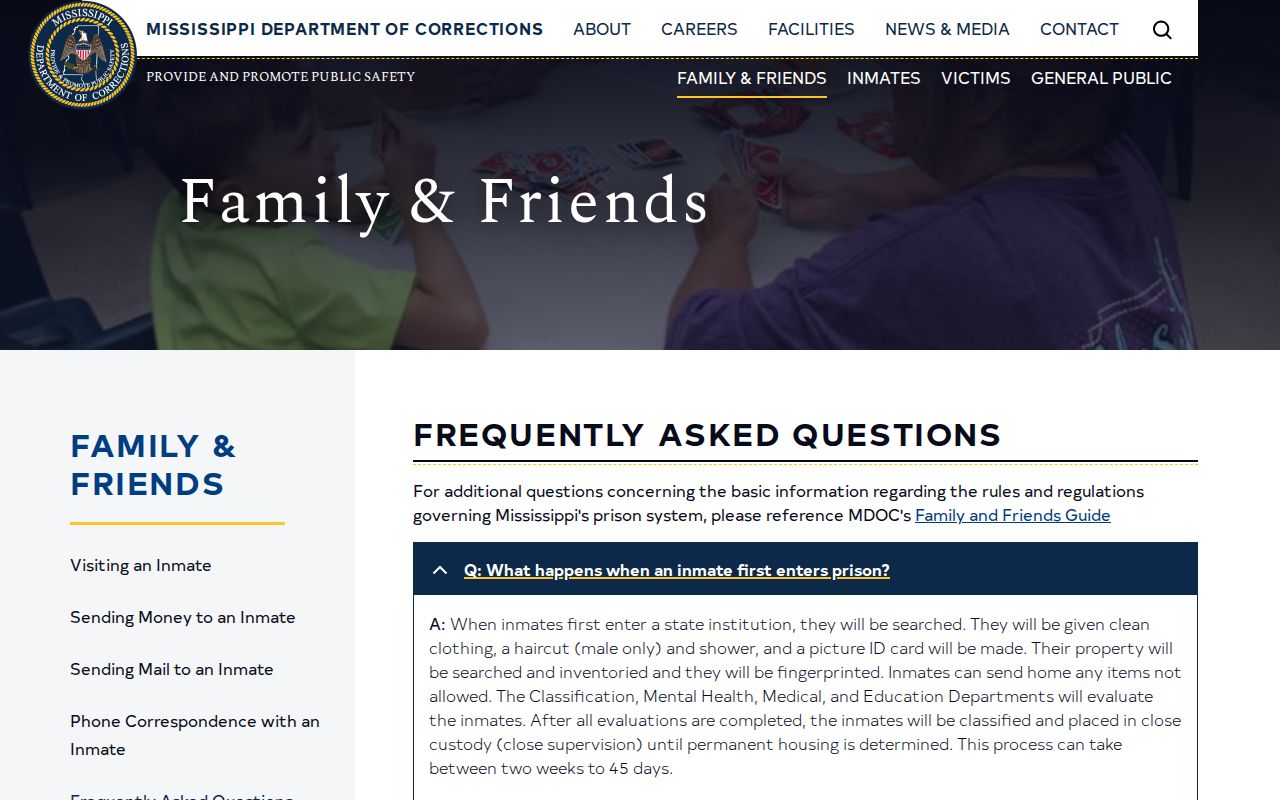
The state guidance links release execution to the certificate, while the public tentative field remains a planning estimate.
Note: A passed tentative date does not establish release when MDOC status, supervision, or discharge documentation remains unclear.
MDOC Supervision After Release
Mississippi separates parole decisions from day-to-day supervision. The State Parole Board grants or denies parole. MDOC Community Corrections supervises parolees, ERS participants, probationers, and other community categories. Probation is imposed by a court and may begin without a state-prison release. A person outside a prison can thus remain under sentence terms even when no institutional location appears.
MDOC maintains a separate parolee search with first name, last name, MDOC ID, city, and county fields. Chickasaw appears as a county filter. Results can include ID, name, location, offense, and details such as county, supervising officer, Flat Time Date, and a photograph. A no-hit does not prove full discharge. The Chickasaw County Parole / Probation page explains the local verification route.
MS SAVIN/VINE may send agency-fed release, transfer, rehousing, temporary movement, abscond, or return events. An alert is useful but not a permanent archive. Read the event wording and confirm it with MDOC. A transfer notification means movement within or between custodial systems unless the event expressly documents community release.
Request MDOC Release Records
When the public search does not settle the question, request the existing state record. MDOC requires a written request and does not accept a telephone request as the formal submission. Identify the person by MDOC ID, name, DOB, and sentence or case information. Ask for the actual release or discharge date, release type, discharge certificate, movement history, and the publicly releasable parts of a time sheet, offender data sheet, parole action sheet, or offender photograph.
MDOC Public Records OfficerMississippi Department of Corrections
301 North Lamar Street
Jackson, MS 39201
601-359-5600
Inspection: 8:00 a.m. to 5:00 p.m. on working days
The preferred online route is the MDOC GovQA public-records portal. The policy states a written response within seven working days and production generally no later than 14 working days after the request and required payment, unless the agency explains that it needs more time. The base copy fee is $0.15 per page. Added search, review, redaction, technology, vendor, or mailing costs may apply, and MDOC can estimate and require prepayment.
The official portal screenshot shows the statewide request channel for records that do not appear in the public offender result.
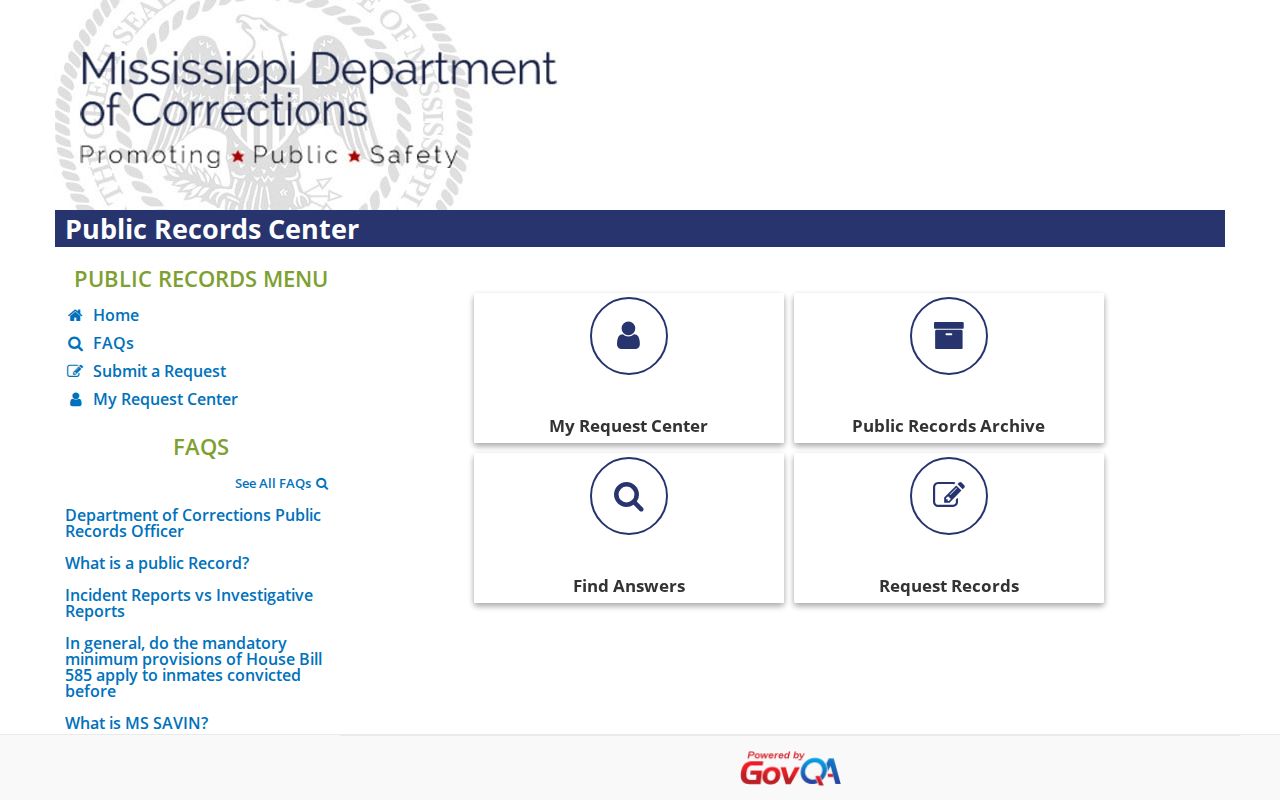
The portal is the formal fallback for a discharge certificate or other releasable MDOC record, not a county booking-release request.
MDOC Release Record Limits
MDOC need not create a record, answer questions, or reformat data. Investigative records, victim information, medical material, sensitive personal data, certain prison records, and parole or probation field-officer records may be protected. Ask the agency to separate and release nonexempt facts when part of a document is withheld. The person may need to authorize nonpublic material, and medical records can require proper authorization or a court order.
A state response covers MDOC custody only. It cannot certify a prior county bond release, an ICE outcome, or the end of federal custody. If MDOC transferred the person, follow the movement entry to the receiving authority. If a court order conflicts with the state record, compare dates and ask the record custodians for the later executed event.
Chickasaw MDOC Location Labels
A public MDOC result can show a Chickasaw unit even when the conviction arose in another county. The reverse is also true: someone convicted in Chickasaw County can be housed elsewhere. “Housed at,” “convicted in,” and “released by” are not interchangeable. Location establishes placement on the date reported, while the sentence and county fields describe jurisdiction and case history.
The Chickasaw County Regional Correctional Facility’s mixed county and state population makes this more than a wording concern. A county detainee needs the local release timestamp and court order. An MDOC prisoner needs the state offender record, time computation, certificate, and supervision details. When the record says only that the unit changed, do not infer a community release.