
Chickasaw Scheduled and Actual Release
The first task is to name the date correctly. MDOC uses “Tentative Release” or “Tentative Release Date” on its public offender detail. The agency’s Family and Friends Guide defines that as an anticipated prison-release date after earned time and jail credit are applied. Maximum Discharge is the expected end point without an earlier allowance. ERS eligibility and parole eligibility are separate milestones.
An actual Chickasaw County release occurs only when the authority with custody executes it. For an MDOC prisoner housed at the regional facility, the state’s discharge certificate, parole or ERS status, and current offender record are stronger evidence than a future web date. For a county detainee, the facility’s booking-release entry and the court order are the sound trail. A transfer means the person left one place but remained in custody.
A pretrial detainee usually lacks a computed sentence-release date. The next event may depend on bond, a hearing, dismissal, plea, time-served order, or transfer. Even a sentenced county inmate follows the court’s judgment, jail credit, and the facility’s own executed calculation. Do not place a county-only case into the state formula unless MDOC has jurisdiction.
Find Chickasaw Inmate Release Dates
Begin by separating the county booking number from the MDOC ID. The Chickasaw County Regional Correctional Facility holds local detainees as well as state prisoners, so the building name alone does not identify who calculates the date. The court case and sentence identify the custodian. Once that is clear, use the official path for that system.
- Match the person with full name, date of birth, booking number, case number, or MDOC ID.
- For an MDOC sentence, open the MDOC inmate search and review the live tentative-release label, location, sentence, and county fields.
- For a county case, contact the regional facility at 662-456-3319 and ask for the existing release or jail-computation record.
- Obtain the sentencing, bond, dismissal, time-served, or amended order from the correct Chickasaw County court.
- Check parole or ERS status when the date depends on approval for community supervision.
- Confirm the actual exit with the discharge certificate, executed release entry, or receiving authority if a transfer occurred.
The Houston and Okolona court contexts also matter. Use the district and case number rather than assuming every case record is kept near the regional facility. A municipal arrest can be booked elsewhere, and an MDOC prisoner located in Chickasaw County may have been convicted in a different county. “Housed at,” “convicted in,” and “released by” can describe three distinct agencies.
The Chickasaw County release-record route is useful when the public search lacks a final status. Ask for the positive event and its timestamp instead of treating disappearance from a roster as proof.
Note: A location-change date can mark movement inside the corrections system and does not establish release into the community.
Chickasaw MDOC Release Date Fields
The MDOC detail record may show name, MDOC ID, date of birth, photograph, entry date, current location, unit, location-change date, sentence count, total sentence length, offense, county of conviction, sentence date, and a tentative release field. Use several fields to prevent a false match. The county field reflects conviction, while the location field reflects placement.
| Field | How to read it | What it cannot prove |
|---|---|---|
| Tentative Release | MDOC’s current anticipated date after applicable adjustments | That release will occur on that date |
| Maximum Discharge | Expected sentence endpoint without earlier release allowances | That no detainer or other sentence exists |
| ERS date | Calculated eligibility for Earned Release Supervision | Approval of the address or actual placement |
| Location / unit | Where MDOC currently assigns the person | County of conviction or community release |
| Location-change date | When the placement entry changed | Discharge from all custody |
MDOC’s public page does not expose every internal computation. The individual may obtain a time sheet through the case manager. That document can show ERS and other calculated dates, while the discharge certificate marks execution of the state release process. Public access to a full time sheet may be limited without authorization.
When a date passes and the public status remains unclear, use the facility or MDOC records route. The agency says parole and ERS dates are not guaranteed. A passed tentative date can reflect recalculation, an unresolved hold, an unapproved placement, discipline, a new sentence, or a delay in processing.
Chickasaw Earned-Time Release Rules
Mississippi Code § 47-5-138 is the earned-time and ERS starting point. It directs MDOC to calculate conditional earned-time dates and contains limits and exclusions. The statute has changed, and the version tied to the offense date can matter. Some offenses require day-for-day service or are excluded from parole or ERS.
The common “85%” phrase comes from rules under which a covered person served at least 85% in a facility and the rest on ERS. MDOC uses that example for some crimes committed on or after July 1, 1995. It is not a universal calculator. The current statute also describes other earned allowances and exceptions. Applying one fraction to every Chickasaw County sentence can produce a false date.
MDOC may consider the sentence start and length, concurrent or consecutive terms, pretrial jail credit, prior convictions, habitual status, earned credits, offense class, special judicial conditions, and the controlling law. Concurrent terms run at the same time. Consecutive terms run one after another. Jail credit accounts for qualifying time already held before sentence.
Parole is calculated under a separate law, Mississippi Code § 47-7-3. Eligibility allows review but does not require a Board grant. Likewise, ERS eligibility does not force release. The proposed residence must be reviewed, and MDOC still has to complete the process.
Note: Use the law effective for the case and the person’s time sheet instead of applying a broad percentage.
Why Chickasaw Release Dates Change
A release calculation can move as the official record changes. Some causes affect the sentence math. Others do not change the sentence but prevent the person from leaving custody on the expected day. Separate those two kinds of events when asking why an MDOC date changed.
| Factor | Effect on the date or exit |
|---|---|
| Earned-time gain or forfeiture | Changes credit applied to the confinement calculation where law permits |
| Concurrent or consecutive correction | Changes how multiple terms overlap or follow one another |
| Pretrial jail credit | Adds qualifying custody time to the sentence computation |
| New court order or sentence | May amend the term, credit, or release authority |
| Parole action | A grant may open a release path, while denial or set-off delays it |
| ERS address approval | An unapproved plan can prevent placement on the eligibility date |
| Detainer or hold | May cause transfer to another authority instead of community release |
A detainer is a request or legal basis for another agency to take custody. The person may leave the Chickasaw facility on the calculated date but enter another jail, MDOC unit, federal custody, or ICE control. That event is a transfer. The receiving agency must then be checked for its own status and release record.
Institutional conduct may also affect earned time, and a revocation may return a supervised person to confinement. Clerical corrections can change a posted date without a new court event. The latest record from the agency that performs the computation should take priority over an older cached page or copied date.
Chickasaw Three-Date Release Check
Mississippi’s state pathway can carry three calculated dates instead of one promise. The ERS date identifies possible conditional placement. The tentative release date reflects MDOC’s current anticipated prison exit after adjustments. The maximum release or discharge date marks the expected end without an earlier allowance. Each answers a different question.
The public detail page tends to foreground the tentative date, while the time sheet can show eligibility calculations. That split explains why a date can pass without release. Eligibility may exist even though an address is not approved, a detainer remains, a Board outcome is pending, or the calculation has changed.
The MDOC supervision page captured below is the official source for these distinctions and places the calculated dates in the state supervision framework.
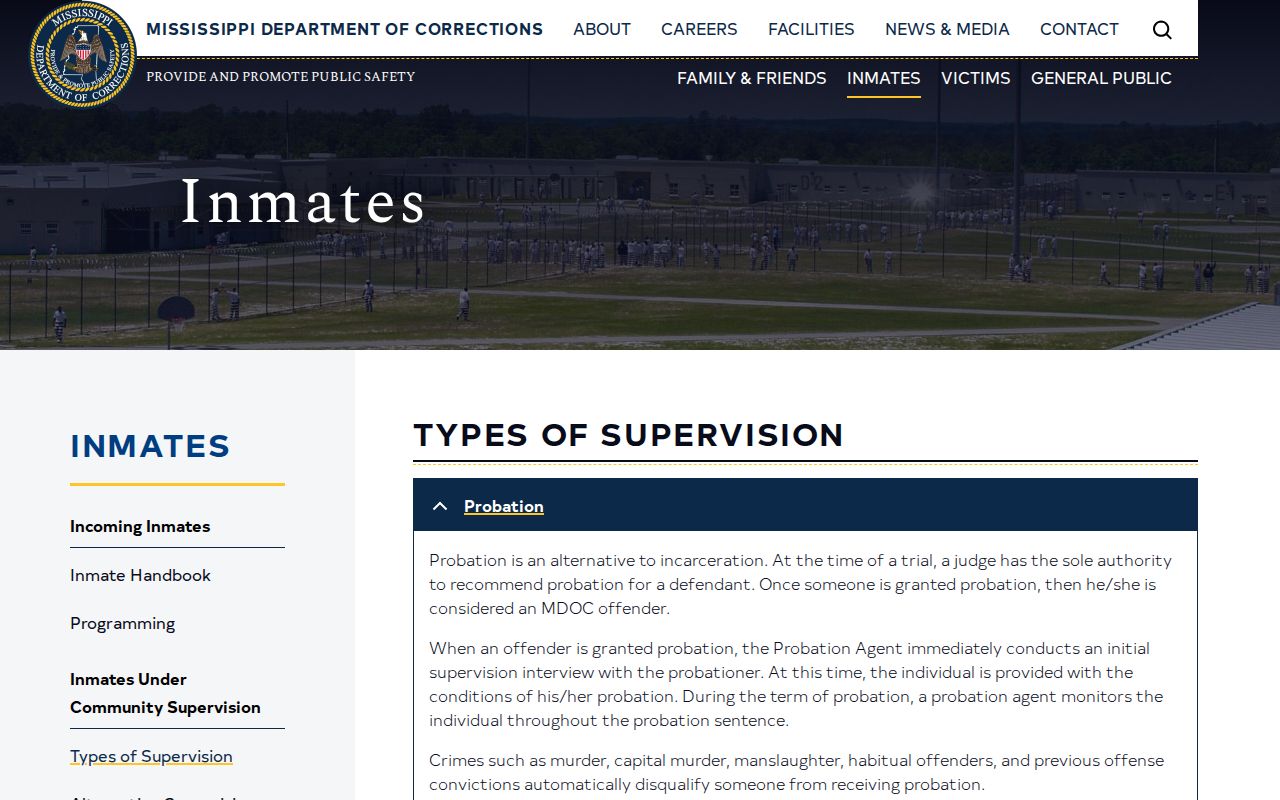
The screenshot supports the key point: calculated eligibility and executed discharge belong to different stages of the Chickasaw County release check.
Chickasaw County-Sentence Release Dates
A county-jail sentence does not automatically use the MDOC tentative field. Request the sentencing order, jail-credit entry, and the regional facility’s executed release record. A judge’s time-served order or local sentence calculation may control. Research found no official Chickasaw County good-time policy and no county weekend or holiday early-release rule, so neither should be assumed.
For a pending case, ask the court what order is currently in force and ask the facility what custody event was recorded. A bond amount or hearing date does not prove the person posted bond. A dismissal may explain why release was authorized, but staff still must execute the exit or handoff. Conversely, a person may have left on bond well before a later dismissal.
When the regional facility identifies the person as an MDOC prisoner, switch to the state route. Placement in a county facility does not turn a state sentence into a local one. Ask for the MDOC ID and use the state record, case manager, Board action if relevant, and discharge certificate.
Note: No verified Chickasaw County rule supports moving a calculated release earlier solely because it falls on a weekend or holiday.
Confirm Chickasaw Actual Release Dates
Final confirmation should pair the date with a release type and authority. For MDOC, compare the newest offender record, the individual time sheet, parole or ERS approval, and the discharge certificate. MDOC’s Family and Friends FAQ says the release process can take 30 to 45 days and that the person must receive the certificate before release.
For local custody, request the booking-release entry with date, time, type, court case, and receiving agency where public. Court records explain the legal reason. The facility record shows when staff carried it out. If the status alert is useful while the event is pending, the Chickasaw County VINELink release check explains registration and the limits of participating-agency data.
Never read “not at this facility” as “free from all custody.” Check whether the event says bond, time served, parole, ERS, transfer, or maximum discharge. Then verify the next authority. That method turns a projected date into a documented Chickasaw County release outcome.